Víctor Balaguer Library Museum
Art, culture and history in a museum full of surprises.
UN FAR PER TORNAR is a show that mixes fiction and reality: the story of a character who embarks on a journey and who through dance, music and song
Space dedicated to tools and field cereals work cereal with the display of a 1932 threshing machine.
Permanent exhibition on the history of the Font de la Canya and the archaeological research of the vineyard and wine. One of the most outstanding exhibitions dedicated to Iberian civilization in Catalonia.
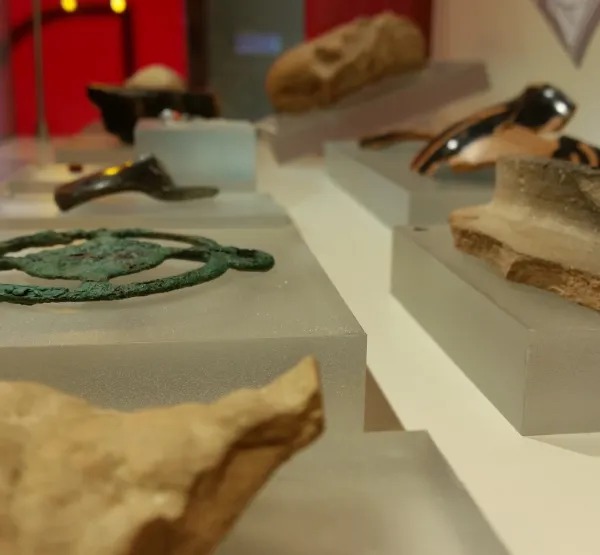
DO Vinífera is the name of the permanent exhibition on the history of this commodity center of ancient Cessetania and the archaeological research o
Located in the old Sant Joan Hospital building (14th c), between 1910 and 1914 it was reconverted into the residence of American industrialist and collector Charles Deering by artist Miquel Utrillo. It houses the collection of ancient (Romanesque, Gothic, Renaissance and Baroque) and modern (Romanticism, Luminism, Modernism and Noucentisme) sculptures and paintings from Dr. Jesús Pérez Rosales’ and Sitges’s collections.
House-workshop of the painter and writer Santiago Rusiñol (1861-1931) which became a public museum in 1933 due to the artist’s legacy in Sitges.
Built by Miquel Utrillo between 1913 and 1918 to house the important art collection belonging to American industrialist and collector Charles Deering, who lived there until 1921, it is the most significant building from the beginnings of Noucentisme in Sitges. In 1935 it was rented by the Catalonian Generalitat as an extension of the Cau Ferrat Museum’s collections and since then it has been dedicated to artistic and cultural activities.
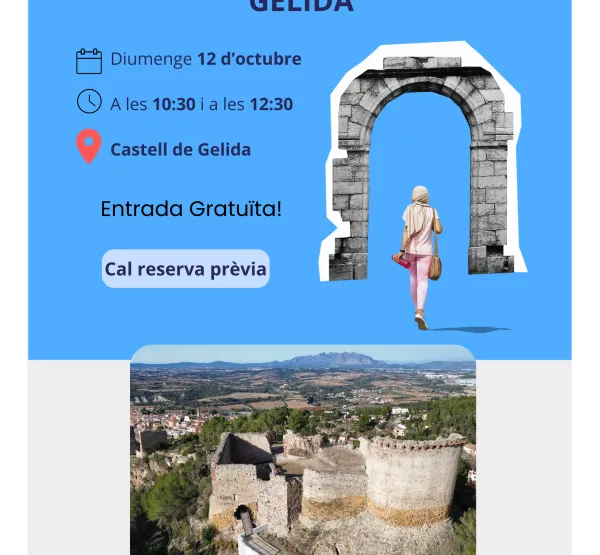
As part of the European Heritage Days, the Associació d'Amics del Castell de Gelida offers completely free guided tours to Gelida's castle.
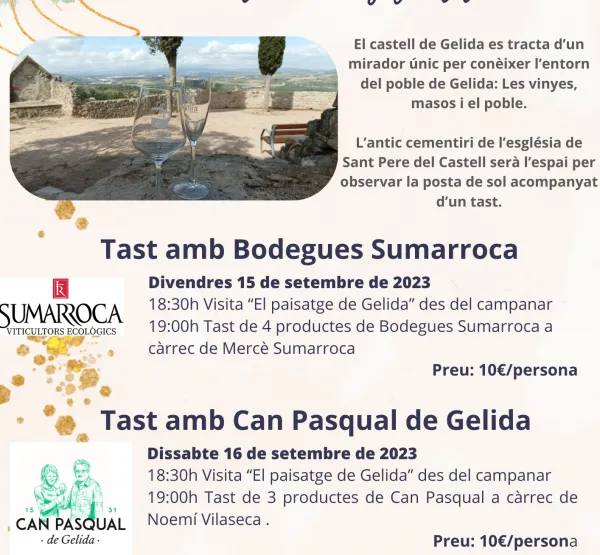
The castle of Gelida is a unique viewpoint to know the surroundings of the village of Gelida: The vineyards, farmhouses and the town.
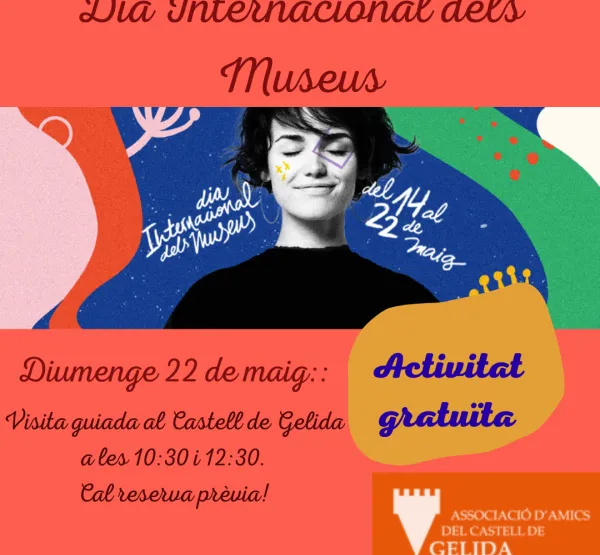
Sunday 22nd May:
Free guided tour at Gelida's Castle.
It's necessary to book in advance.
Santes Creus Monastery came into being in 1160 under the patronage of the Montcada and Cervelló houses and Count Ramon Berenguer IV. On the banks of the River Gaià the monks, who came from the Occitan Abbaye de Grandselve, found the ideal site for building a monastery which, until 1835, would be...
Price:
Services:
Iberian site from the 7th to 1st centuries BC located in Avinyonet del Penedès where evidence has been found related to the beginnings of the vineyard and wine in Penedès.
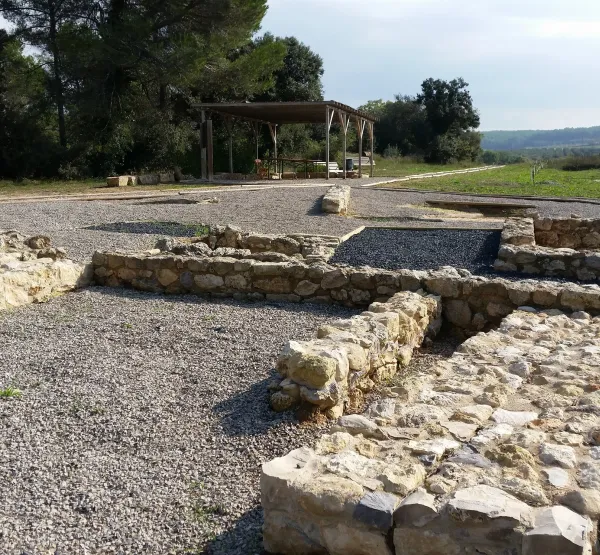
The archaeobotanical studies carried out at the Turó de la Font de la Canya site confirm the role of this settlement as the cradle of viticulture i